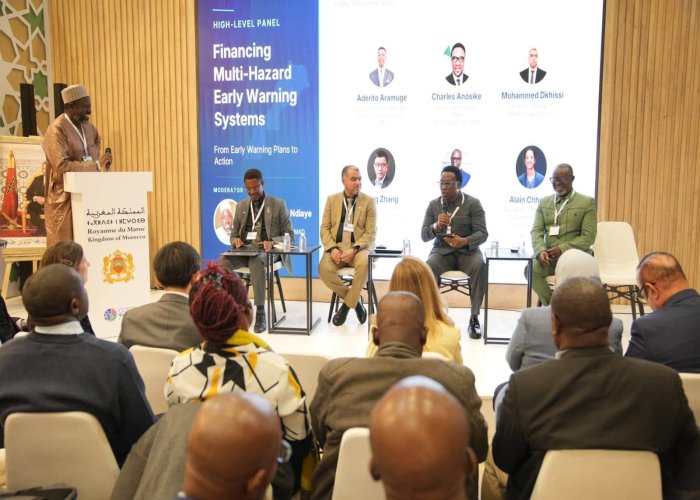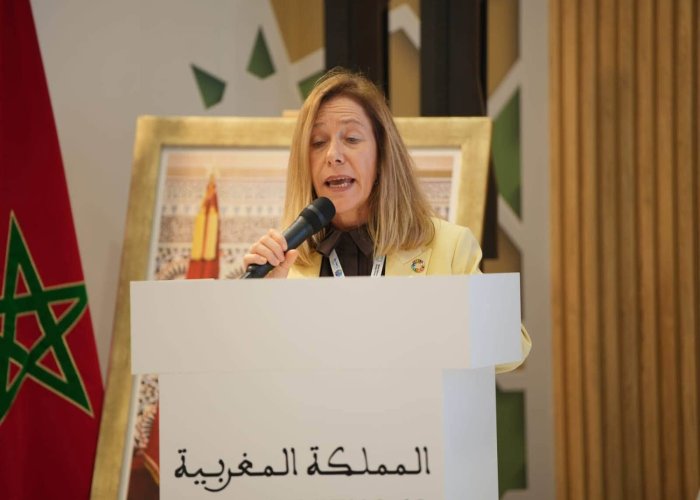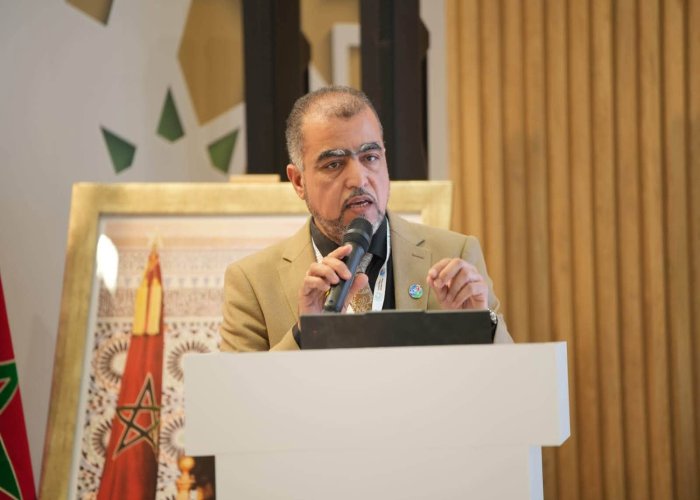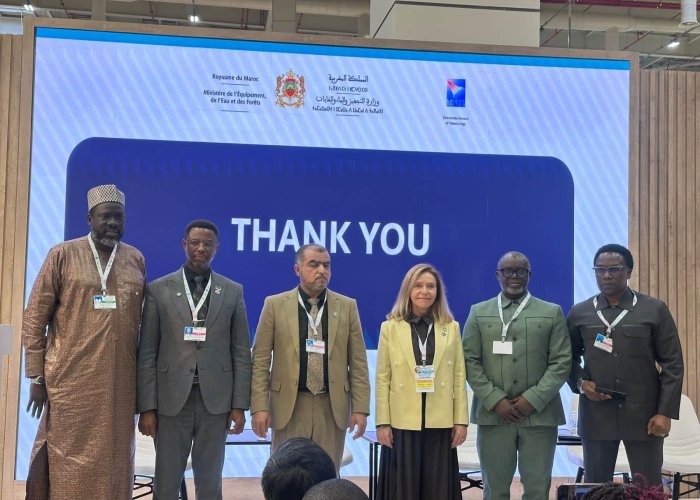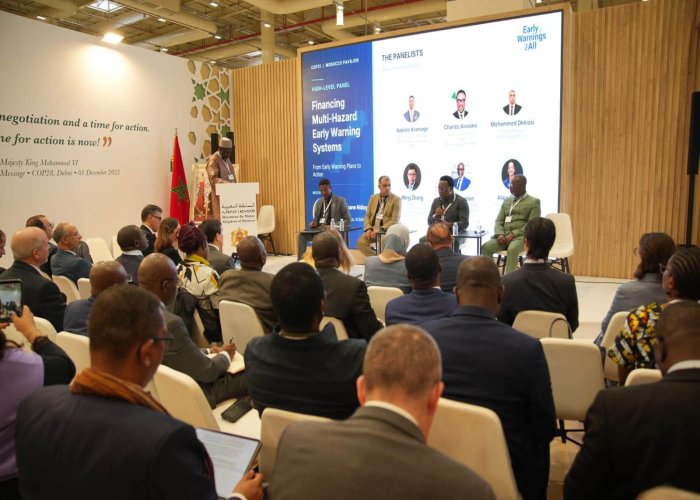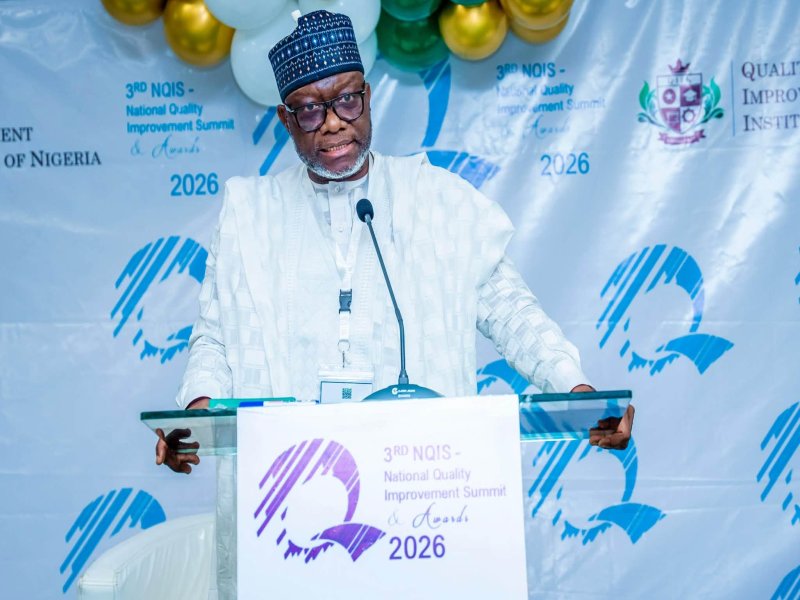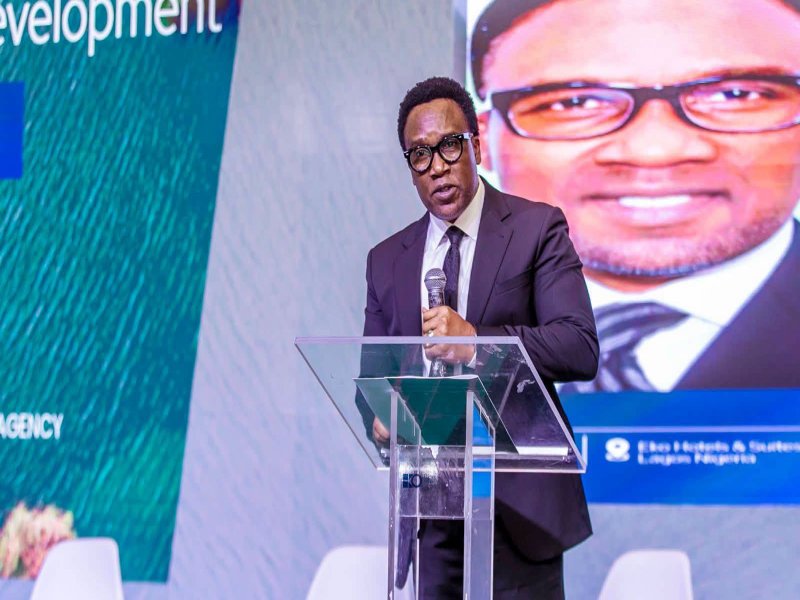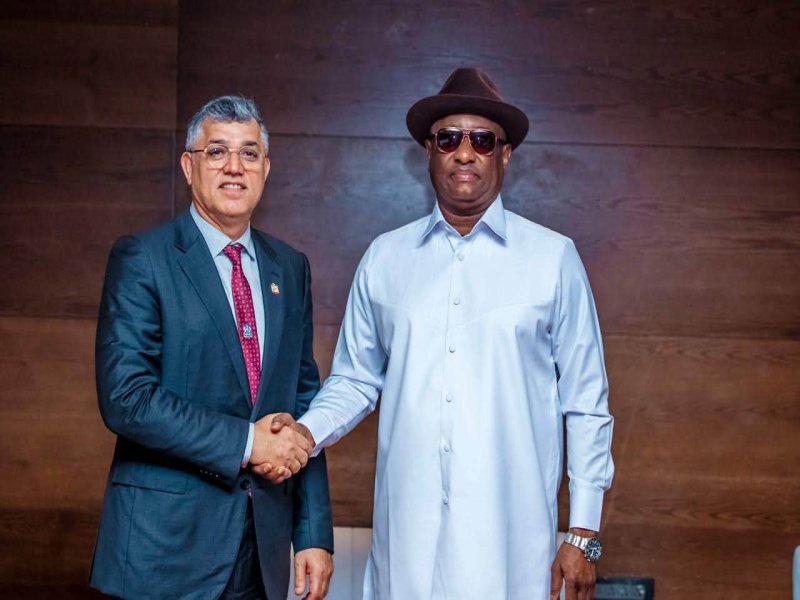
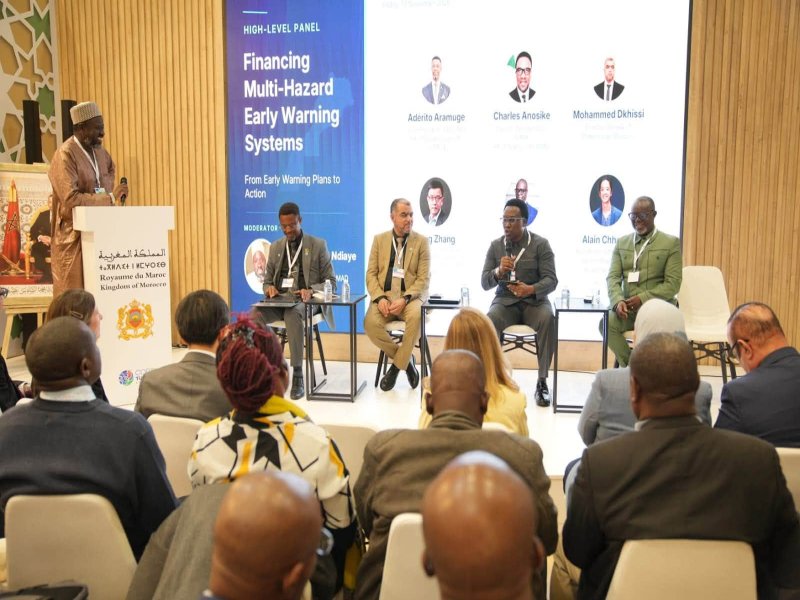
The Director General/Chief Executive Officer of the Nigerian Meteorological Agency (NiMet), Prof. Anosike, has called for regional cooperation to improve meteorological observations and the sustainability of National Meteorological and Hydrological Services (NMHSs). He made the call at the ongoing COP31 in Antalya, Türkiye, at a high-level side event in the Morocco Pavilion, organized by the General Directorate of Meteorology (DGM) in collaboration with the Ministry of Equipment, Water, and Forests of the Kingdom of Morocco.
Speaking during a High-Level Panel Session on Financing Multi-Hazard Early Warning Systems, the DG-NiMet stated that the Nigerian Meteorological Agency (NiMet) has its focus on three (3) key drivers for mobilization of resources, which include investment in the workforce (targeting employee growth and improved welfare), continuous expansion of the Agency’s observation network and systems, and strengthening partnerships, as well as the ability to translate climate data into actionable insight for Nigerians and the Nigerian economy.
Prof. Anosike, while acknowledging the critical importance of government budgets, informed the audience that private sector participation is central to the sustainability of NMHSs. He stated that physical climate risk has a price and therefore meteorological service providers should start developing business portfolios that can bring the private sector to the discussion table. Adding that NiMet is presently engaging the private sector, such as private insurance companies, on how to share risk and lower long-term costs of climate-related damages.
Prof. Anosike further emphasised that no country could tackle the challenges and cost of generating and disseminating climate information alone, as forecasting weather and climate hazards requires cross-border cooperation, with data shared across regions and transformed into actionable warnings by National Meteorological and Hydrological Services (NMHSs). He therefore called for stronger regional cooperation to reduce the cost of maintaining weather observation systems, pooling resources, standardizing process and building regional frameworks that can unlock multiple cost-saving mechanisms.
The Professor also canvased for support to regional and continental institutions such as African Centre of Meteorological Applications for Development (ACMAD), noting their essential role in harmonising frameworks needed for ease of access and absorption of climate finance.
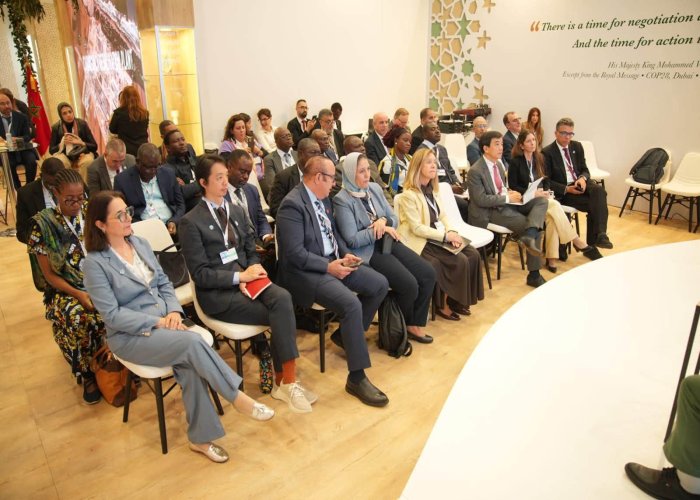
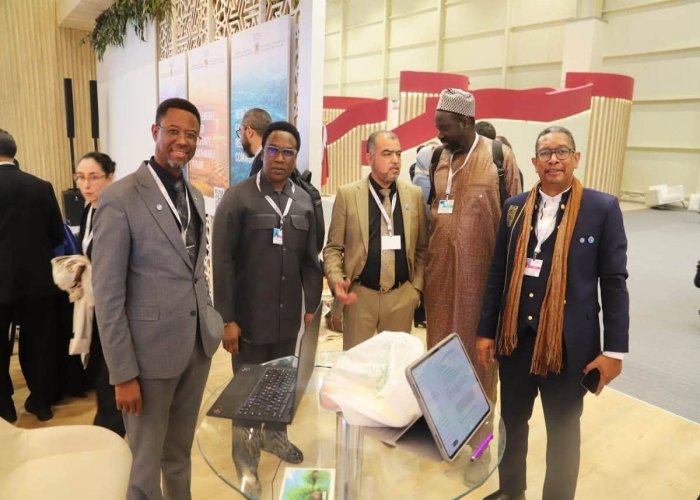
The event drew attendance from representatives of the Government of Morocco; WMO and the EW4All pillar partners (UNDRR, WMO, ITU, and IFRC); Permanent Representatives with WMO; Directors of African National Meteorological and Hydrological Services; multilateral development banks; climate funds; bilateral development partners; UN agencies; regional institutions; scientific and technical organisations; private-sector partners; and relevant national stakeholders.